Choosing Affordable door hardware for rental homes is not simply a matter of finding the lowest price. Owners need dependable products that withstand frequent use, tenant turnover, and occasional careless handling. A loose lever on a busy entry door can create frustration within days. A weak latch can become a maintenance call.
Hardware consultant Paul T. O’Neill explains, “Good door hardware should survive daily use without making the tenant think about it.” That practical view shapes this guide. It considers passage knobs, privacy levers, deadbolts, hinges, strike plates, and smart-entry options. Each category is judged by durability, installation effort, replacement cost, and everyday usability.
Details matter. A metal lever with a firm return spring usually feels better than a hollow, rattling knob. A longer screw can improve strike-plate stability when it reaches solid framing. Still, inexpensive hardware is not automatically poor quality. Some budget models perform well in bedrooms, closets, and interior passageways. Exterior doors demand more careful selection.
The best choice depends on the property. A student rental may need simple, replaceable levers. A renovated duplex may benefit from matching finishes and stronger entry hardware. There is no perfect package, honestly. Even reliable products can fail when installed poorly or exposed to harsh weather.
This overview highlights affordable options that balance price, tenant experience, and long-term maintenance. It also points out where saving money makes sense—and where it may create another repair later.
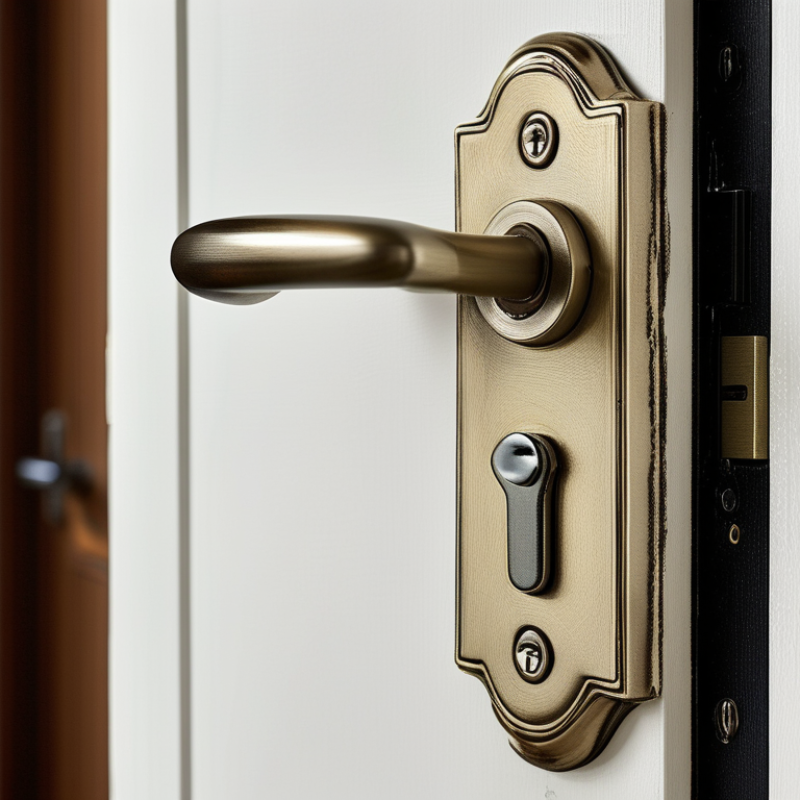
Affordable door hardware for rental homes should balance price, durability, and easy replacement. Lever handles are practical for tenants carrying groceries or small children. They are also easier to operate than round knobs. Basic passage handles work well for bedrooms, kitchens, and hallways without privacy needs. Privacy handles suit bathrooms and sleeping areas, especially when emergency release features are included.
Entry doors need stronger hardware. A single-cylinder deadbolt can provide reliable security at a modest cost. Pair it with a sturdy exterior lever or knob. Keypad locks may reduce key replacement problems, but cheap models can fail in extreme weather. Check battery access, manual entry options, and warranty terms before installation. Small details matter.
For interior storage rooms, simple latches or cabinet locks may be enough. Heavy-duty hinges are another affordable upgrade, particularly when doors sag or scrape the floor. During inspections, I look for loose screws, cracked plates, and uneven gaps around the frame. A common mistake is choosing attractive hardware that cannot survive frequent tenant turnover. I have made that mistake before. Now, I test the handle repeatedly and keep matching replacement parts onsite. All hardware should fit the existing door thickness and meet applicable local safety requirements.
Typical US retail prices for common, non-branded door hardware sets. Passage and privacy knobs are usually the lowest-cost choices, while entry levers and deadbolts cost more because they include locking mechanisms.
For rental homes, durable door hardware must survive daily use, rushed moves, and occasional rough handling. I have replaced loose knobs and damaged latches after only one season. Solid metal construction, reinforced screws, and a corrosion-resistant finish usually offer better value than the cheapest option. Choose adjustable latches when possible. They simplify repairs across different door thicknesses.
Security should remain practical, not intimidating. A reliable deadbolt, a strong strike plate, and three-inch screws can improve resistance to forced entry. Check that the lock closes smoothly without lifting or pushing the door. Tenants should receive clear instructions and working keys. Complicated systems may frustrate residents and increase maintenance calls. Key control also matters, especially after a tenant leaves. Keep a simple record and replace cylinders when appropriate.
Tips: Test every lock with the door both open and closed. Tighten screws during inspections. Keep one emergency replacement set onsite. Avoid hardware that looks secure but feels flimsy. A small installation mistake can weaken good equipment. I still find that assumption causes problems. Ask tenants whether the handle is comfortable, especially for children or residents with limited hand strength. Affordable hardware works best when durability, security, and everyday convenience are considered together.
Affordable hardware should handle daily use without making every repair expensive. For interior doors, passage levers work well where privacy is unnecessary, such as kitchens, hallways, and closets. Privacy levers suit bedrooms and bathrooms, especially models with emergency release access from outside. They are usually easier for children and older tenants to operate than round knobs.
Keep it simple.
For exterior doors, a sturdy entry lever paired with a separate deadbolt offers practical security at a reasonable cost. Choose solid metal construction, a reinforced strike plate, and long screws that reach the wall framing. In coastal or humid areas, corrosion-resistant finishes can prevent early replacement.
Weather changes everything.
A tight latch and adjustable hinges also reduce drafts and rattling. From rental maintenance experience, matching common hole sizes saves time during turnover. Measure the backset, door thickness, and existing bore holes before ordering replacements. Universal interior sets can be convenient, but their fit is not always perfect. I have occasionally trusted the product description too quickly.
Check the installation guide instead.
For exterior openings, confirm local building, fire-safety, and accessibility requirements before changing hardware. A low price matters, but a loose latch, weak strike, or poor finish can create larger costs later.
Affordable door hardware can reduce rental turnover costs without making the property feel neglected. In my rental turnovers, I check the door, frame, hinges, and strike plate before buying replacements. Measure twice. A low-cost lock will fail if the latch does not align with the frame.
Choose hardware based on room function. Exterior doors usually need a durable deadbolt and a handle with a comfortable grip. Bedrooms may need privacy hardware, while closets often need simple passage handles. Confirm the backset, door thickness, and hole spacing. These small measurements prevent unnecessary drilling. I once ordered a replacement without checking the backset, and the handle sat too close to the frame. It worked, but the fit looked careless.
During installation, remove loose screws and inspect the wood around the latch. Use longer screws where the frame can safely support them, but avoid damaging wiring or nearby glass. Test the lock with the door open, then closed, and never force a stiff latch. Fire-rated doors, emergency exits, and shared-entry systems may require specific hardware and professional installation. Check local housing and fire-safety requirements before changing them. A qualified locksmith can identify unsafe alignment or weakened frames. Keep receipts, measurements, and installation dates for maintenance records. I still recheck every replacement after the first tenant report, because small settling changes can create larger problems.
Affordable door hardware works best when maintenance comes before replacement. Inspect deadbolts, levers, hinges, and strike plates every three months. Loose screws can make a strong lock feel useless. Use a certified residential lock meeting ANSI/BHMA performance standards. Longer screws, usually three inches, can improve strike attachment into wall framing. The 2023 FBI Crime Data Explorer recorded more than 800,000 burglary offenses in the United States. Secure installation still matters.
Safety checks should include the door frame, not only the lock. Look for splitting wood, rusted fasteners, sticking latches, and gaps larger than a pencil. Test each exit with the door closed and locked. Residents should never need a key to escape where local safety rules require quick release. The National Fire Protection Association reports that home fires caused thousands of civilian deaths and injuries annually. A difficult door can become a serious delay. I have learned that inexpensive hardware often fails because inspections are skipped, not because the hardware is poor.
Tips: Keep a small kit with spare screws, graphite or silicone lubricant, a screwdriver, and a flashlight. Record each repair with a date and apartment number. Lubricate moving parts lightly, but avoid overusing oil, which attracts grit. Replace damaged hardware instead of repeatedly tightening it. Compare bulk pricing before purchases, though the cheapest lock may create more service calls. This checklist is useful, but imperfect; older frames may require professional evaluation.
| Hardware or Practice | Best Use | Typical Material | Estimated Unit Cost (USD) | Routine Maintenance | Safety Check | Recommended Review | Cost-Saving Practice | Priority |
|---|---|---|---|---|---|---|---|---|
| Passage Door Knob or Lever | Interior bedrooms, closets, and hallways that do not require locking | Zinc alloy, steel, or stainless steel | $8–$25 | Tighten mounting screws and clean with a damp cloth; avoid abrasive cleaners. | Confirm the latch retracts fully and the handle does not loosen, bind, or detach. | Every 6 months and between tenants | Use the same common size and finish throughout the property to simplify replacements. | Medium |
| Privacy Door Knob or Lever | Bathrooms and bedrooms where basic privacy is needed | Steel or zinc alloy | $10–$30 | Check screw tightness and apply a small amount of dry lubricant if the latch becomes stiff. | Verify the emergency-release feature can be opened from outside without damaging the door. | Every 6 months and after tenant turnover | Choose models with a standard emergency-release mechanism rather than replacing the entire lockset. | High |
| Single-Cylinder Deadbolt | Exterior entry doors with a keyed cylinder outside and thumb-turn inside | Steel or brass components | $18–$45 | Inspect alignment, tighten screws, and use a manufacturer-approved dry lock lubricant when necessary. | Deadbolt should extend fully into the strike plate and operate without excessive force. | Monthly visual check; detailed check every 6 months | Correct door and strike alignment before replacing the deadbolt; misalignment is a common cause of failure. | High |
| Reinforced Strike Plate | Exterior doors requiring stronger resistance around the latch and deadbolt | Heavy-gauge steel | $5–$18 | Check that all screws remain tight and that the plate is flush with the jamb. | Use sufficiently long screws that secure the plate to the structural framing where appropriate. | Every 6 months and after forced-entry damage | Upgrade the strike plate before replacing a functioning lock; it is often a lower-cost security improvement. | High |
| Door Hinge Set | Interior and exterior hinged doors with sagging, squeaking, or uneven gaps | Steel or stainless steel | $4–$15 per hinge | Replace missing screws, remove debris, and use a light hinge lubricant when required. | Check for loose knuckles, damaged pins, excessive movement, and door rubbing. | Every 6 months | Replace individual damaged hinges instead of the complete door assembly when the door and frame remain sound. | Medium |
| Adjustable Door Strike | Doors with minor alignment changes caused by seasonal movement or settlement | Steel or zinc-plated steel | $6–$18 | Keep the strike opening free from paint buildup and debris. | Confirm the latch remains engaged when the door is closed and does not require slamming. | Every 6 months and after weather changes | Adjust the strike before planing or replacing the door, which can prevent unnecessary labor and material costs. | Medium |
| Door Closer | Common-area, utility, or fire-rated doors where controlled closing is required | Aluminum body with steel hardware | $25–$80 | Inspect fasteners, arm connections, and leakage; do not over-adjust the closing-speed valves. | Door should close and latch completely without slamming or remaining open. | Monthly in high-use areas; quarterly elsewhere | Repair loose fasteners and adjust closing speed before replacing the closer. | High |
| Door Stop | Protecting walls, handles, and hinges from impact | Rubber, steel, or zinc alloy | $2–$10 | Tighten the base and replace cracked rubber tips. | Ensure the stop does not prevent the door from closing, latching, or meeting clearance requirements. | Every 6 months | Install a wall or hinge stop before repeated handle impact causes drywall or trim repairs. | Low |
| Lever Handle for Accessible Rooms | Doors requiring easier operation than round knobs | Steel or zinc alloy | $12–$35 | Clean high-touch surfaces and tighten the through-bolts or mounting screws. | Check that the handle can be operated with one hand and returns properly after use. | Every 6 months and between tenants | Use lever sets with replaceable latches and common mounting dimensions to reduce future replacement costs. | Medium |
| Key Control and Rekeying | Managing access after tenant turnover or lost-key incidents | Mechanical cylinders and labeled key records | $10–$30 per cylinder | Maintain a current key inventory and remove former occupants from access records. | Rekey exterior cylinders after lost keys, unauthorized duplication, or a change in occupancy when required by policy. | At every tenant turnover and after a security incident | Rekey compatible cylinders instead of replacing complete locksets when the hardware is in good condition. | High |
| Pre-Turnover Hardware Checklist | Standardizing inspections before a new tenant moves in | Printed or digital checklist | $0–$5 per inspection | Record loose screws, damaged finishes, sticking latches, missing keys, and worn weather seals. | Test every exterior lock, window-adjacent door, emergency-release feature, and common-area closer. | At every tenant turnover | Group minor repairs into one maintenance visit to reduce travel and labor time. | High |
| Standardized Replacement Parts | Reducing inventory complexity across multiple rental units | Common latch, hinge, screw, and strike dimensions | $10–$50 starter stock | Store parts in labeled containers and track usage by property or unit. | Confirm replacement parts match the door thickness, backset, handing, and intended security function. | Inventory review every quarter | Buy frequently used generic replacement components in small bulk quantities while avoiding incompatible overstock. | Medium |
| Cost figures are typical planning ranges in U.S. dollars for basic hardware only and may vary by material, door type, location, labor, taxes, and local safety or building-code requirements. Always verify applicable fire, accessibility, egress, and landlord-tenant rules before installation. | ||||||||
: Choose solid metal handles, reinforced screws, and corrosion-resistant finishes. Adjustable latches can fit several door thicknesses. The cheapest option may disappoint.
Use a reliable deadbolt, a strong strike plate, and three-inch screws. The lock should close smoothly without lifting or pushing the door.
Inspect deadbolts, levers, hinges, and strike plates every three months. Check for loose screws, rust, sticking latches, and damaged frames.
Test each lock with the door open and closed. Confirm that the latch extends fully and the key turns without force.
Provide working keys and simple lock instructions. Ask whether the handle feels comfortable for children or residents with limited hand strength.
Keep a basic key record and replace cylinders when appropriate. Store one emergency replacement set onsite. Simple records prevent confusion.
Inspect the frame for splitting wood, large gaps, and weak fasteners. Residents should not need a key to escape where local rules require quick release.
Keep spare screws, a screwdriver, a flashlight, and suitable lubricant nearby. Apply lubricant lightly because excess oil attracts grit.
Replace hardware that remains loose, sticks, or shows serious damage. Repeated tightening may hide a deeper frame problem. My checklist is useful, but imperfect.
Choosing affordable door hardware for rental homes requires balancing cost, durability, security, and tenant convenience. Suitable options include basic knobs, levers, deadbolts, handlesets, privacy locks, and passage hardware, selected according to each door’s purpose. For interior doors, simple privacy and passage sets are often sufficient, while exterior doors benefit from stronger locking mechanisms, weather-resistant finishes, and sturdy construction. Features such as easy operation, replaceable parts, corrosion resistance, and compatibility with standard door preparations can help reduce future expenses.
Landlords should measure existing hardware carefully, follow installation instructions, and replace damaged or unreliable components promptly. After installation, regular inspections should check screws, strike plates, latch alignment, locking action, and signs of wear or rust. Lubricating moving parts appropriately and keeping spare components available can prevent minor issues from becoming costly repairs. By choosing practical hardware, completing proper safety checks, and maintaining a consistent replacement schedule, property owners can improve security and tenant satisfaction while keeping long-term maintenance costs under control.

Batul Hardware